Best AI Meeting Assistant for Field Sales in 2026
Key takeaway
How to choose an AI meeting assistant for field sales, in-person client meetings, speaker separation, structured notes, and clear follow-up actions.
The Bottom Line
An AI meeting assistant for field sales should work in physical rooms without requiring a meeting bot, keep the rep focused on the client, and turn the conversation into reviewable notes and next steps. The right choice depends on where the team meets, how it captures consent, and what people need to do after the conversation.
Who it's for: Field sales reps, account managers, and business development teams that handle their most important client conversations in person.
What sets it apart: EurekaMind pairs dedicated recording hardware with EurekaMind's AI workflow. Together, they convert physical conversations into structured notes, action items, and follow-up support. Sales reps can use it without a laptop, meeting bot, or stable network.
Where it wins: EurekaMind fits in-person client visits, multi-stakeholder meetings, showroom conversations, and back-to-back field days. It works best when reps need to focus on the relationship instead of the device.
Where it falls short: Sales teams that run nearly all meetings through Zoom or Microsoft Teams may already have enough coverage from Fireflies or Microsoft Copilot. Dedicated hardware adds less value in a pure video-call workflow.
Verdict: EurekaMind treats the conversation as the start of a sales workflow, not the end of one. For field sales, that shift is where the real productivity gain lives.
The Note-Taking Problem Specific to Field Sales
The best client conversations do not feel like interviews. They feel like dialogue: open, trust-driven, and responsive. That is what makes in-person meetings hard to document.
A field rep has to listen for signals, build rapport, and capture details at the same time. One of those tasks usually suffers. Typing too much weakens eye contact. Staying fully present can blur the details after the meeting. Waiting too long makes the follow-up thin and late.
Manual note-taking in field sales is more than inconvenient. It conflicts with the attention a strong client conversation requires.
Most AI note takers are built mainly for video conferencing, where a bot joins the call, audio is clean, and the internet connection is stable. In field sales, all three conditions can fail at once. Sales reps need a tool that disappears into the meeting so they can stay present.
What Using EurekaMind in a Real Client Meeting Actually Feels Like
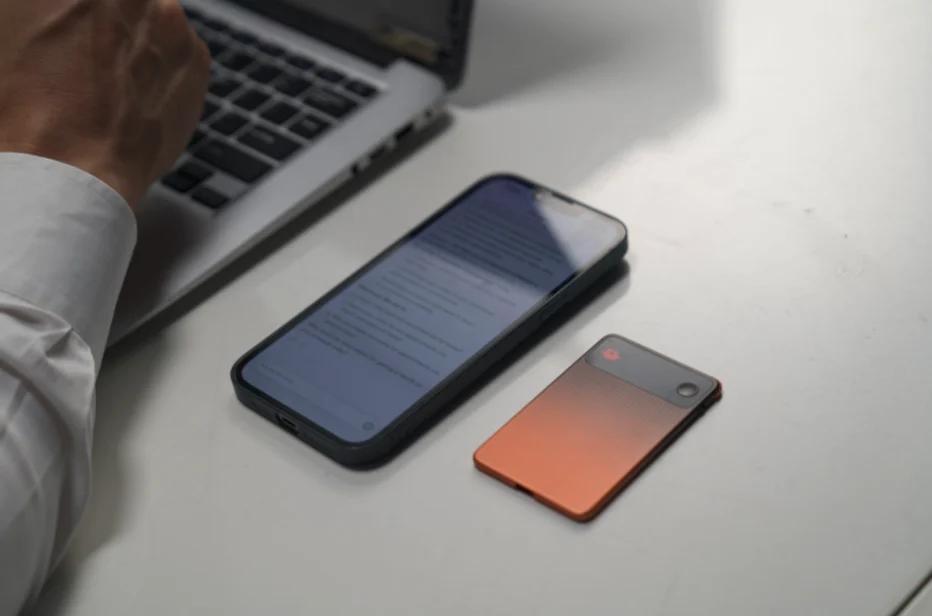
Before the client meeting, the rep places the device on the table and starts it with a half-second long-press on the corner key — a haptic buzz confirms recording has begun, no phone unlock required. Open recording mode picks up conversation across a 10-metre range, which covers most client-visit setups without repositioning the device.
Note-taking drops off the cognitive stack. Full attention goes to the client: their concerns, the subtext under objections, and the moments where a sharper follow-up question could open something useful. That is the actual payoff of hands-free capture: not the recording itself, but the conversation you have because you are not managing a device.
After the meeting, EurekaMind organises the recording into structured notes. It extracts action items and flags follow-up tasks with context attached. What once took 20 minutes of post-meeting reconstruction becomes a five-minute review.
From Voice Capture to Sales Action
EurekaMind provides the recording hardware. EurekaMind is the AI layer that processes what EurekaMind captures. A standard recorder stops at audio. A transcription app usually ends with text. EurekaMind is built around a longer chain:
Client conversation → structured notes → action items → reminders → follow-up support → conversation history
A client meeting carries several types of information at once: objections, buyer signals, budget limits, promised materials, decision-maker dynamics, and next-step agreements. Left in a raw transcript, a rep has to dig through all of it manually. EurekaMind surfaces the signal — the conversation becomes organised, searchable sales context instead of another file sitting in a folder.
Why Follow-Up Is the Metric That Actually Matters
The transcript is not the output. The follow-up matters most.
A client conversation loses commercial value every hour the follow-up sits unsent. If the client raised an objection, the next message should address it precisely. If they asked for a case study, it needs to arrive on time. If they mentioned a decision-maker who was not in the room, that person should not disappear from the deal.
After every meeting, sales reps need clear answers:
- What matters most to this client?
- Which commitments did I make, and what is the due date?
- Which person owns the next step?
Against those criteria, EurekaMind is a voice-to-action system, not a storage device. That distinction separates a productivity tool from an archive.
Speaker Separation: Why Attribution Matters Strategically
Enterprise and mid-market sales meetings rarely involve one decision-maker. A buyer may bring a technical evaluator. A department head may bring finance. Each person carries different priorities and different authority over the outcome.
In those meetings, who said something matters as much as what was said. Treating every comment as generic 'meeting content' leads to weak follow-up — the response addresses the room, not the people in it.
EurekaMind's speaker separation identifies individual voices and organises content by participant, building a contact-centred conversation history across multiple interactions. For relationship-driven sales with long cycles and many touchpoints, that context becomes a durable advantage.
EurekaMind vs. Plaud and Fireflies for In-Person Sales
The right comparison is not only 'which tool transcribes more accurately?' The better question is: 'which tool fits an in-person sales workflow from start to finish?'
Fireflies is built for scheduled video meetings. There is no natural entry point for a walk-in client visit or a showroom conversation, since there is no call for a bot to join.
Plaud is the closer comparison — also purpose-built recording hardware for real-world audio. Where the two diverge is what happens after the recording stops. General-purpose recorder apps typically return a transcript and a summary and leave the rest to you. EurekaMind carries the recording further: notes organised by topic, action items with context attached, reminders tied to specific commitments, and a conversation history that accumulates across every touchpoint with the same account.
Why Dedicated Hardware Reduces Friction
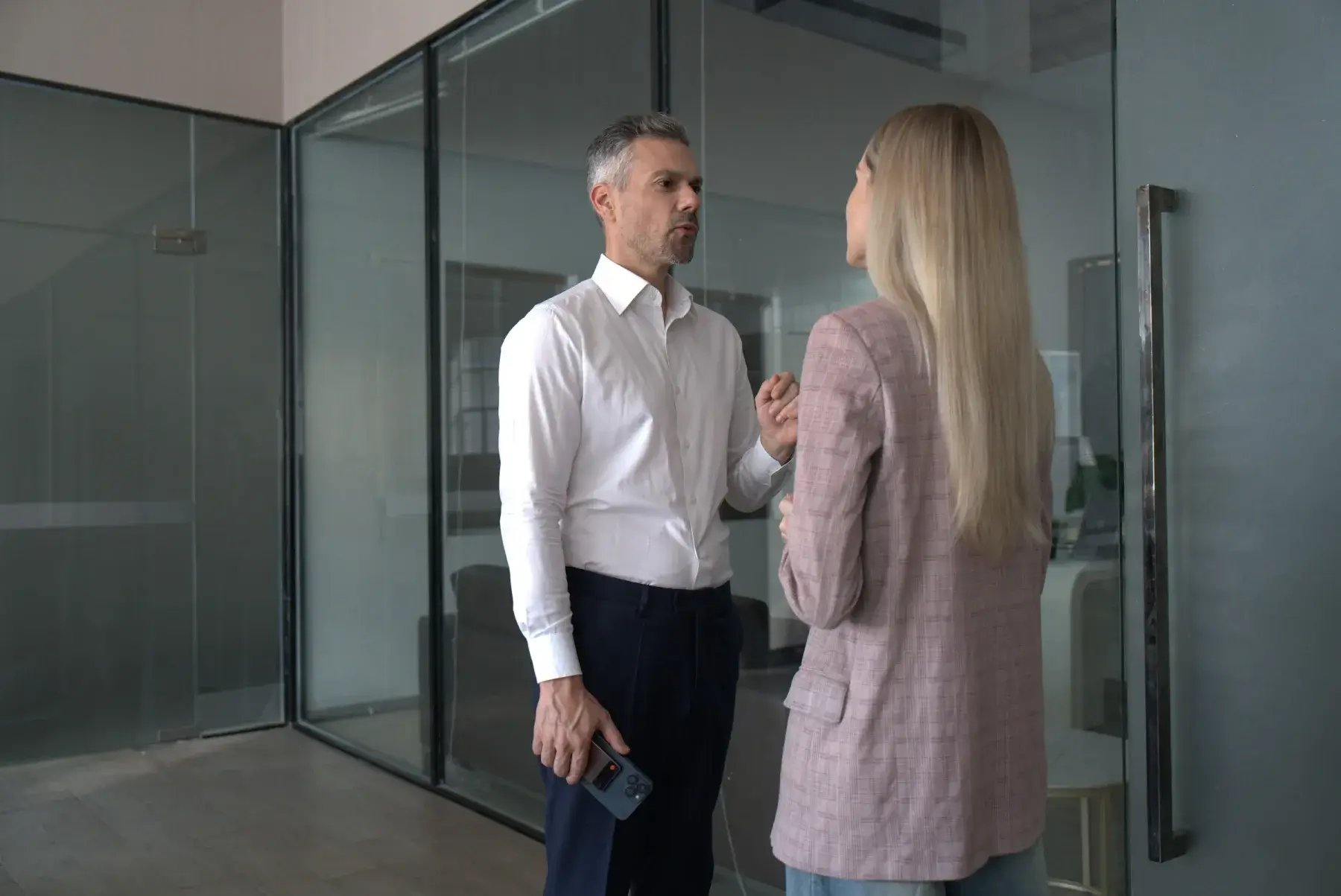
A smartphone can record audio, but it is not the right tool for a client-facing meeting. Phones receive notifications, lock, and get pulled away for other tasks mid-conversation. A phone on the conference table can also signal distraction before the meeting has even started.
A laptop creates a different problem: opening one can turn an informal discovery conversation into a formal presentation, which is often the wrong dynamic when relationship-building still matters.
Dedicated hardware sidesteps both. EurekaMind runs 30 hours of continuous recording on a single charge with around 30 days of standby time, and charges over standard USB-C — no proprietary cable to track down between field appointments.
Final Verdict
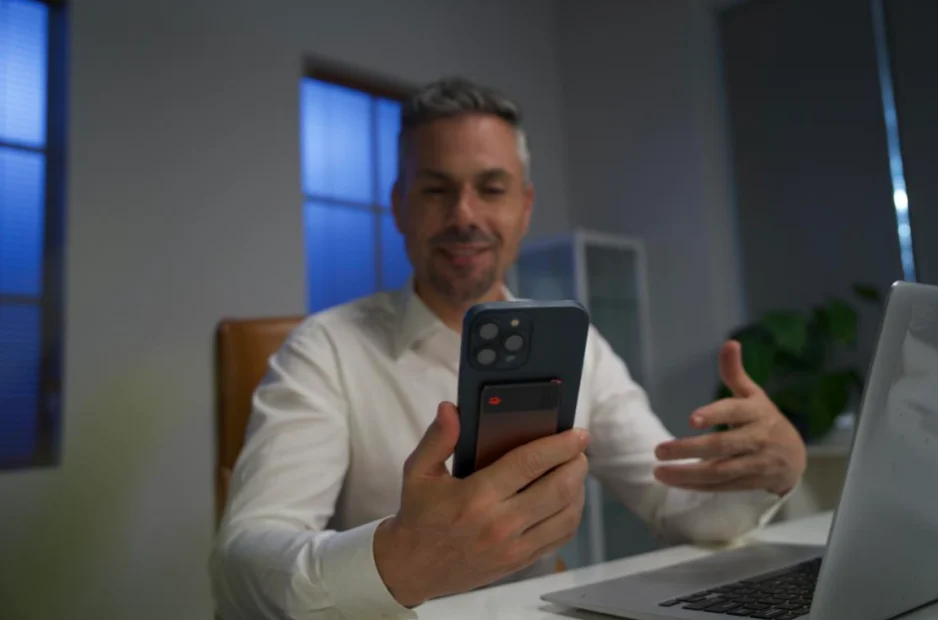
The best AI note taker for field sales is not simply the tool with the most advanced transcription engine. It is the tool that keeps the rep fully present during the conversation and delivers useful output as soon as the meeting ends.
EurekaMind earns that position through dedicated hardware and EurekaMind's AI workflow. The hardware removes device friction from client meetings. The AI layer turns recordings into structured notes, action items, reminders, and a conversation history that becomes more useful after every interaction with the same account.
For field sales teams whose most important work happens in physical rooms, EurekaMind offers a practical advantage: fewer forgotten details, faster follow-up, better meeting notes, and stronger context for every meeting that follows.
Related reading
FAQ
What is the best AI meeting assistant for in-person sales meetings?
The best fit is an AI meeting assistant that can capture an in-person conversation without joining a video call, then produce notes that a sales rep can review before taking action. Teams should compare recording consent controls, performance in their actual meeting environment, note quality, and the usefulness of the follow-up workflow before choosing a product.
What is the best AI note taker for sales reps who meet clients in person?
It should capture real-world conversations without requiring a laptop or meeting bot, and generate structured notes, extract action items, and support fast follow-up. EurekaMind is built around all four. Fireflies and Otter.ai perform well in video environments, but the setup assumptions behind them do not translate to physical rooms.
Can EurekaMind help turn sales conversations into follow-up emails?
Yes. EurekaMind organises recorded conversations into structured notes, action items, and reminders — the scaffolding for a follow-up email without a manual reconstruction session. Output quality depends on recording clarity, room noise, and device position.
How does EurekaMind compare with Plaud and Fireflies for in-person sales?
Fireflies is optimised for online meetings. Plaud handles real-world capture well. EurekaMind's differentiation shows up after the recording stops: structured notes, action items, reminders, and a contact-centred conversation history that builds value across multiple client interactions.
How accurate is EurekaMind's transcription and speaker separation?
Speaker separation works across all 18 of EurekaMind's supported speech-to-text languages. Real-world accuracy depends on room acoustics, background noise, and device placement — test it in your actual meeting environment before rolling it out across a team.
Is EurekaMind worth buying for sales teams in 2026?
For teams that rely on in-person client meetings and multi-stakeholder conversations, yes. Teams that conduct nearly all sales through video conferencing may see less incremental value if they already use a meeting assistant.