Best AI Note Taker for Product Managers in 2026
Key takeaway
Why product managers need an AI note taker that records product meetings, phone calls, video calls, and in-person meetings, then turns discussion into clear action items.
The Bottom Line
Who it's for: Product managers, project managers, program managers, and cross-functional leads who move between product meetings, stakeholder calls, sprint reviews, and informal product conversations.
What sets it apart: EurekaMind pairs dedicated recording hardware with EurekaMind's AI workflow. It turns product discussions into structured notes, action items, speaker-attributed decisions, and post-meeting follow-up.
Where it wins: EurekaMind fits cross-functional meetings, in-person meetings, stakeholder phone calls, customer interviews, and moments where the PM needs to stay present rather than typing.
Where it falls short: PMs who work only in online meetings with an existing meeting assistant may already have enough coverage.
Verdict: The best AI note taker for product managers does more than create meeting transcriptions. It turns meetings into execution.
Product Managers Inherit Meeting Consequences
A requirement discussion can become a design debate. A sprint review can turn into bug triage. A stakeholder call can change the roadmap in ten minutes.
By the end, the product manager may have scattered notes, unclear ownership, and a partial memory of what each team member agreed to do. A transcript alone does not solve this — it records what people said, not what was decided, who owns the next step, or what might block the sprint.
Fireflies, Otter.ai, and Microsoft Copilot work well when a meeting has clean audio, a stable connection, and a bot joining through the calendar. That covers part of a PM's meeting load. It does not cover the in-person requirement session at a whiteboard, or the stakeholder phone call that quietly changed the priority.
Why Product Meetings Are Especially Hard to Document
Product meetings carry several types of information at once. A designer raises a usability concern. An engineer flags a constraint. A stakeholder changes the priority. Someone agrees to follow up, but the owner can get lost as the conversation moves on.
After the meeting, the PM has to reconstruct the discussion from memory:
- What was decided?
- Which person owns the next step?
- Which issue is blocking downstream work?
This is why product managers need meeting notes built around action items, ownership, and decisions — not just raw text.
Using EurekaMind in a Real Product Meeting
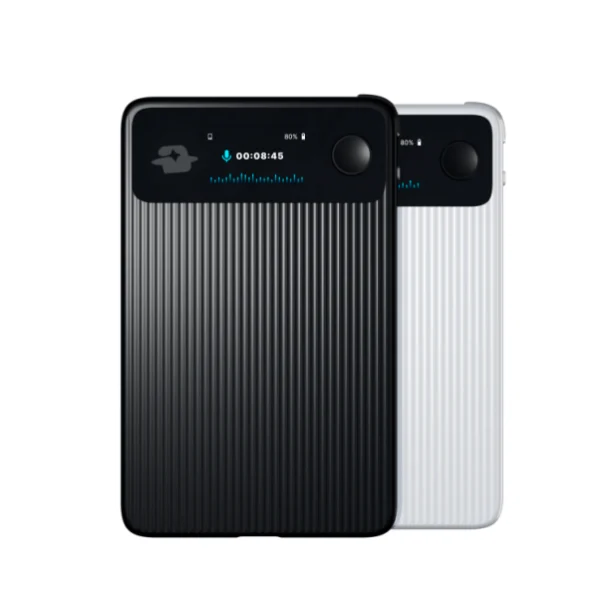
During a requirements discussion, the usual note-taking approach forces a trade-off: type enough to capture the meeting, or stay present enough to actually guide it.
EurekaMind removes that trade-off. The PM starts recording with a half-second long-press, sets the device down, and stays in the product logic instead of the notes app. After the meeting, EurekaMind organises the recording into structured notes with action items attached — the gap between 'conversation happened' and 'next steps are clear' closes fast.
From Product Conversation to Execution
Product discussions do not stay in one format. Some happen in online meetings, some in conference rooms, others over the phone or in a quick hallway exchange. EurekaMind captures across these settings, and EurekaMind processes the recording into a consistent workflow:
Conversation → recording → AI notes → action items → reminders → project follow-up
A basic meeting recording still leaves work for the PM — a transcript still needs review. Without an AI layer on top, every conversation still has to be turned into tasks by hand. EurekaMind removes that post-meeting step, converting product context directly into summaries, ownership, and next steps.
Speaker Separation: Why Attribution Drives Better Follow-Up
Product decisions depend on who said what. Engineering flagging an API limit carries a different meaning from sales reporting customer demand. Leadership changing a priority can override the whole meeting agenda. When a tool groups all of that together as one undifferentiated transcript, the PM loses the context needed for follow-up.
EurekaMind's speaker separation organises product meetings by participant, so the PM can see who raised an issue, who agreed to a task, and who needs the next update. The output reads like a decision log:
- Engineering confirmed the API limit.
- Design agreed to revise the onboarding flow.
- Sales requested a customer-facing explanation before launch.
- The PM took ownership of rewriting the acceptance criteria.
Each item carries an owner, and each owner becomes a follow-up action. Over time, this builds a clearer record across cross-functional teams and recurring product meetings.
Phone Calls and the Fragmentation Problem
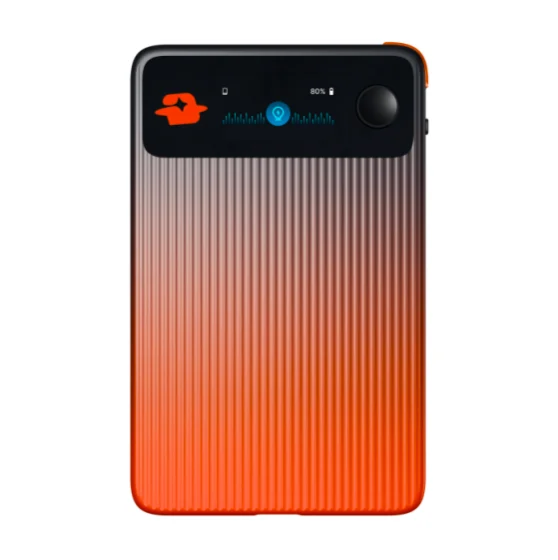
Product work does not wait for scheduled meetings. A stakeholder may call to flag a release risk. An engineer may call to clarify an acceptance criterion. A customer success lead may share feedback that changes the spec — often with no meeting agenda, shared document, or meeting assistant involved.
EurekaMind captures iPhone calls through its bone-conduction mic, which picks up the call acoustically from the handset — no third-party app or extra hardware needed. Sliding the device's side switch into call mode routes it into the same note-taking workflow used for in-person meetings, keeping product context in one place instead of splitting it across memory, chat, and personal notes.
Recording consent laws vary by jurisdiction — confirm local requirements before using phone call recording at scale.
EurekaMind vs. Plaud and Otter.ai for Product Teams
Otter.ai works well for online meetings and live transcription, but loses ground as soon as product work moves into in-person meetings, phone calls, and informal hallway discussions.
Plaud is the closer hardware comparison — also built for real-world audio capture. EurekaMind's differentiation shows up in what happens next: structured notes organised by topic and speaker, action items with context attached, reminders tied to specific commitments, and a conversation history that persists across sessions with the same stakeholder.
For product managers, Otter fits teams working mostly through scheduled video calls, while EurekaMind fits PMs who need to capture the real, unscheduled conversations where product decisions actually happen.
Final Verdict
The best AI note taker for product managers converts conversations into execution across the places where product work actually happens.
EurekaMind earns that position through dedicated hardware and EurekaMind's AI workflow. The hardware captures in-person meetings, phone calls, and workshops that a meeting bot would miss entirely. The AI layer surfaces action items, preserves speaker context, and cuts down post-meeting cleanup.
For PMs moving between requirement sessions, stakeholder calls, sprint reviews, and informal product conversations, EurekaMind gives the team clearer ownership, fewer lost commitments, and faster follow-up. Before scaling across a team, confirm phone-call recording consent requirements for your region and storage and encryption details.
Related reading
FAQ
What is the best AI note taker for product managers to capture and assign action items?
It should capture product meetings across online and in-person settings, create structured notes, separate speakers, surface action items, and support follow-up without manual reconstruction. Fireflies and Otter.ai cover the video-meeting case well but not every in-person meeting or phone call.
Can EurekaMind record phone calls and separate multiple speakers?
Yes for iPhone calls, via a bone-conduction mic that picks up the call acoustically — no extra app or hardware required. Speaker separation works across all 18 supported speech-to-text languages, helping PMs assign action items to the right person instead of treating a whole meeting as one undifferentiated source.
How does EurekaMind compare with Plaud and Otter.ai for product meetings?
Otter.ai is built mainly for online meetings. Plaud handles real-world capture well. EurekaMind's edge shows up in the post-recording workflow: structured notes by topic and speaker, action items with context, reminders tied to commitments, and conversation history across sessions.
What are the real pros and cons of EurekaMind for product managers?
Advantages: in-person meeting capture, iPhone call recording, speaker attribution, AI meeting notes, action item extraction, and less post-meeting cleanup. Before scaling: verify privacy documentation, storage policies, battery life, and phone-call recording consent requirements for your region.